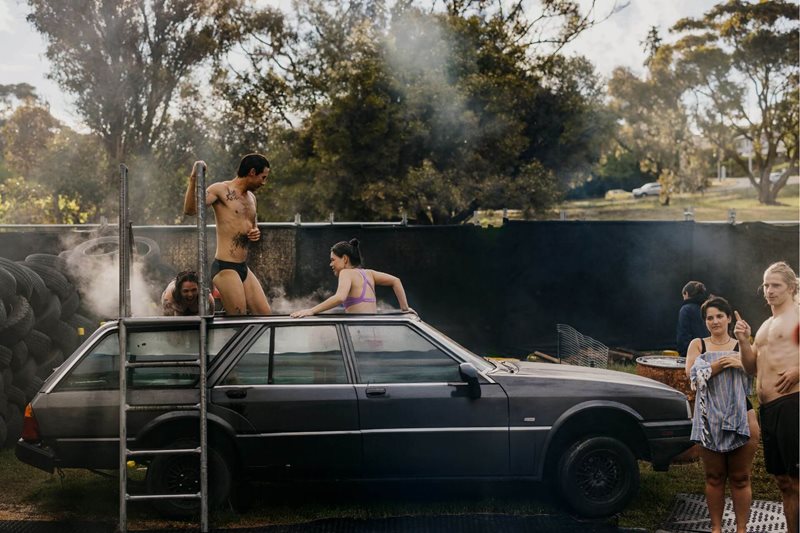
High up on Stargazer Lawn sits what looks like a typical wrecking yard of junk cars, with one key difference: you can swim in them. Led by Palawa youth in conjunction with participatory artist and industrial designer Benjamin Paul, a group of local First Nations teenagers have turned wrecked metal into vehicles of reprieve, community and care. Old Falcons and Commodores, once dirty icons of speed and combustion have become wood-burning saunas, hot pools and cold plunges.
A workshop series, public exhibition, and large-scale healing ritual all at once, waynapuni pools came into being over nine months in Lutruwita/Tasmania as Palawa youth learned practical design, fabrication, and metalworking skills as well as connecting to culture through ceremony. Now this mob cross the water as leaders, sharing what they've learned with their peers on Gadigal Country.
This is a youth-led and built space turning engines to water, metal to breath, wreckage to ritual. You can wander the installation as an art park or take the plunge in a (literally) immersive ceremony facilitated by young mob, artists, Country, and community. Bring your swimmers and your towel for an experience unlike any other. "waynapuni" (why-nah-pu-nee) means “smoke” in palawa kani, the language of Tasmanian Aborigines.
12
Jan
24
Jan
When
12 - 24 Jan, 2027
Precinct
Sign Up
Subscribe to be the first to know about our latest news and events.